
 Download Duncan's illustrated historical e-book 1918 Spanish Flu Pandemic - Compared with Covid-19 - from Smashwords: click here >>
 Download Duncan's latest illustrated historical e-book Norsemen to Vikings - Early Scandinavian History - from Smashwords: click here >>
dMAC Free Bonus
 Download Duncan's free illustrated historical e-book 1918 Spanish Flu from Smashwords: click here >>
dMAC Digest-History:
ANZAC & Lone Pine Revisited 1975 >>Download this free e-book
Illustrated Historical Novel:
Culann ~ Celtic Warrior Monk >>Download this free e-book
 Illustrated Historical Novel:
Roman Britain in the 1st century CE
Illustrated Historical Novel:
Roman Britain in the 1st century CE
Roman Britannia Bulletin #1 >>Download this free e-book
The 1918 Spanish Flu Pandemic |
Duncan MacDonald
Jakarta 30 October 2006
Revised 29 December 2021
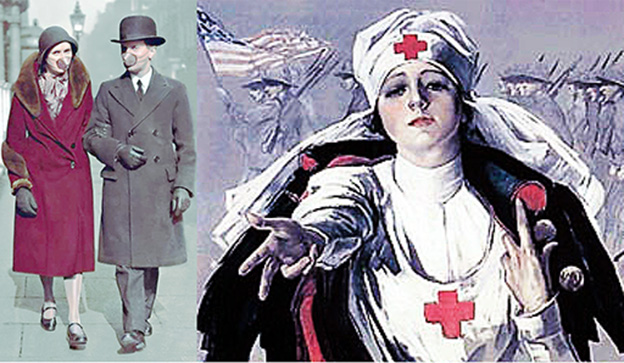 1918 Spanish Flu
 Flu outbreaks occur every year and vary in severity, depending on what type of virus is spreading.
The Covid-19 Pandemic was first discovered on 17 December 2019 in Wuhan, China [initially called SARS-Cov-2]. To get a better understanding of this current pandemic, it is useful to compare historical pandemics, such as the Spanish Influenza of 1918, also know as the Great Influenza Pandemic, the 1918 Flu Epidemic and La Grippe.
Note: The current Covid-19 is a very different virus.
It is not Influenza - more like a chronic accute pneumonia.
Spanish Flu - the 1918 Pandemic
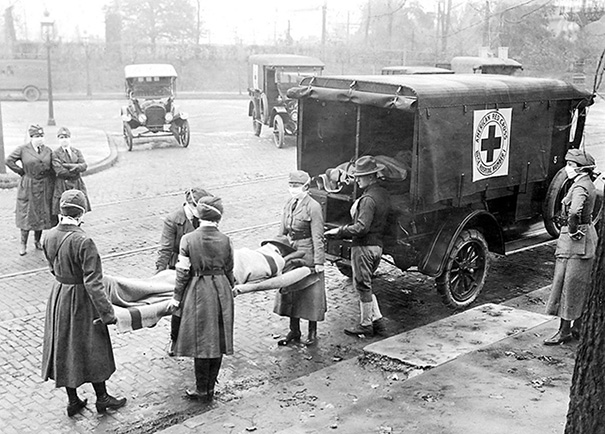 Ambulance St Louis Misouri 1918
 The Spanish Flu Pandemic was possibly the most devastating epidemic in recorded history, - and a deadly strain of avian influenza. A viral infection, it killed some 50 million to 100 million people worldwide in 1918 - 1919. It was caused by the H1 N1 flu virus.
The Spanish Flu killed more people in 25 weeks than;
• Black Death (Bubonic Plague) in 4 years 1347 - 1351 (approx. 35 million - that is 1 out of every 2 Europeans alive at the time).
• The total Nº of people killed in the 5 years of WW1 1914 -18 (estimated 16 million).
• The total Nº of people killed from HIV AIDS in the last 40 years. (estimated 36.3 million).
The Allies of World War 1 frequently called it the Spanish Flu. This was mainly because the pandemic received greater press coverage in Spain than the rest of the world, because Spain was not involved in the war and there was no wartime censorship, and was the first to report the epidemic.
Spain did have one the worst early outbreaks of the disease with some 8 million people infected in May 1918. King Alfonso XIII of Spain was one of the early victims, but he recovered.
In Spain, they called it the "French Flu"
It was also known as "only the flu" or "the grippe" by public health officials seeking to prevent panic. The belligerents squashed news of the outbreak so the enemy will not find out about their weakness.The First Recorded Case
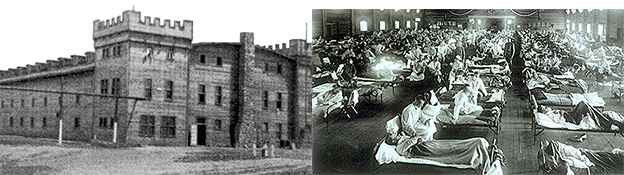 Fort Riley, Camp Funston, Kansas Camp Funston Infirmary - 1918
 Shortly before breakfast on Monday, 11 March 1918 the first recorded case of Spanish Flu occurred when Company cook Albert Gitchell reported to the infirmary at Fort Riley, Camp Funston, Kansas. He complained of a "bad cold". Immediately behind him came Corporal Lee W Drake with a similar complaint.
By noon, Camp Surgeon Edward R Schreiner had over 100 sick men on his hands, all apparently suffering the same symptoms. Within five weeks, 1,127 people would be infected and 46 would die.
Fort Riley was a sprawling establishment housing 26,000 men within its 20,000-acre boundaries. The winters were bone-chilling cold - the summers sweltering. Sandwiched between these two extremes were blinding dust storms. Within the camp were thousands of horses and mules that produced a stifling 9 tons of manure each month. Disposal of the manure was by burning, often made more unpleasant by the driving wind. Like most army camps, it bred its own swine and poultry for consumption.
In April and May soldiers at Camps Hancock, Lewis and Sherman came down with the same ailment. Over 500 prisoners at San Quentin State Prison, in California also fell ill. Influenza spreading among men living in close quarters did not alarm public health officials at the time. Little data existed to indicate any sizable spread among the civilian population. Besides, the nation had bigger matters on its mind - it had a war to win!
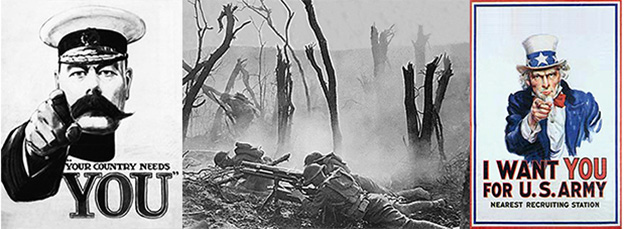 Lord Kitchener American 23rd Infantry, France 1918 Uncle Sam
 In March 84,000 American 'Dough-boys' set out for Europe. They were followed by another 118,000 in April 1918. Little did they know they were carrying with them a virus more deadly than the rifles they carried. While sailing the Atlantic, the 15th US Cavalry incurred 36 cases of influenza, resulting in 6 deaths. By May, the killer flu had established itself on two continents and was spreading spectacularly.
The influenza of 1918 showed no bias in its approach to the combatants in World War I. Men from all sides sickened and died. Great Britain reported 31,000 flu cases in June alone. By early summer, the flu had spread beyond the U.S. and Western Europe.
Numerous cases were reported in Russia, North and South Africa, South America and India - which suffered one of the worst mortality rates with over 17 million dying after infected troop ships returned home.
The Pacific Ocean provided no protection as influenza spread to parts of China, Japan (with one of the lowest mortality rates), the Philippines, Australia and New Zealand. By July, the Spanish Flu of 1918 had infected millions and tens of thousands had already died. This first wave was but a prelude. During the autumn, it would mutate and reappear in full devastating force.
Early Records of Influenza
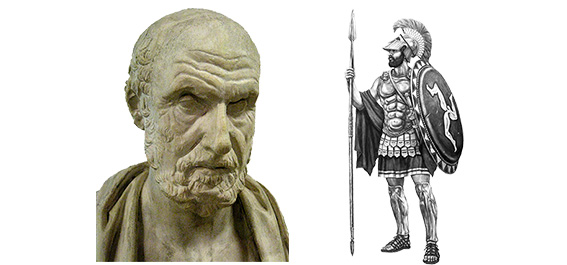 Hippocrates Athenian Hoplite Soldier
 The first recorded European epidemic [a disease that affects a large Nº of people within a community or region] was in 1173-1174 CE although, the first generally agreed pandemic [an epidemic that's spread over multiple countries or continents] occurred in 1580 CE. Since then there have been 31 documented pandemics of cough, shivering, aching pains and sweating; all symptoms suggestive of flu.
It is impossible to establish the early history of flu, as it was so little understood until the mid 20th century. Also, respiratory infections would have been secondary to other deadly infectious diseases such as plague, smallpox, typhus and measles.
Modern Flu Pandemics
The 20th century had 4 pandemics:
1918 [H1N1] Spanish flu (50 to 100 million deaths)
1957 [H2N2] Asian flu (70,000 deaths)
1968 [H3N2] Hong Kong Flu (34,000 deaths)
1996 [H5N1] Avian (Bird) Flu (very low deaths)
The 21st century pandemics:
2009 [H1N1] Mexican flu (359 deaths as at 10 Aug 2012) [WHO]
2019 The Covid-19 Pandemic (5.5 million deaths as at 21 Jan 2022) [Worldometers.info]
Selected Top countries Covid-19 death toll, as at 21 January 2022:
United States 883,903
India 488,422
Brazil 622,251
Russia 324,060
Britain 153,202
France 128,114
Germany 117,044
Indonesia 144,199
China 4,636
Australia 2,984
Singapore 845
New Zealand 52 [Worldometers.info]
Why was the 1918 Spanish Flu the deadliest?
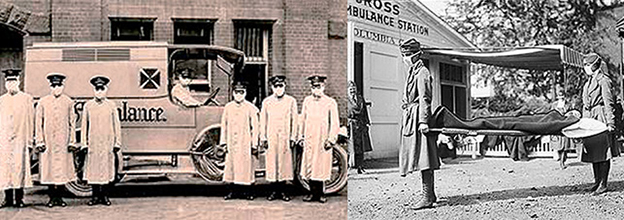 Ambulance attendants
 All flu viruses are thought to have originated in birds. Scientists also think that to cause human epidemics, the virus had to jump from birds to pigs, where the genetic changes occur to enable the virus to spread in mammals (humans).
Different influenza strains spread around the world annually. Every so often, a strain tough enough to kill millions emerges. Experts believe the world is overdue for another pandemic. Unravelling what made the 1918 Spanish flu so vicious could help doctors' better react if a similar strain returns.
After-the-fact surveys of bloodstream antibodies suggest that 98% of Americans alive in 1918 and 1919 had been infected
The Spanish flu virus had a profound virulence, with a mortality rate in the USA of 2.5% compared to the previous flu epidemics which were less than 0.1% (25 times higher) Different regions suffered different mortality ratesSpanish Flu - Most Deadly for the 20 to 40's
Influenza is usually a killer of the elderly and young children. However, the Spanish Flu was most deadly for people aged 20 to 40's.
People aged 20 to 40 are in the prime of their life. Their bodies reacted, or in fact over-reacted to the 1918 virus, causing the lungs to fill with blood from burst blood vessels. Death was by drowning in one's own bodily fluids.
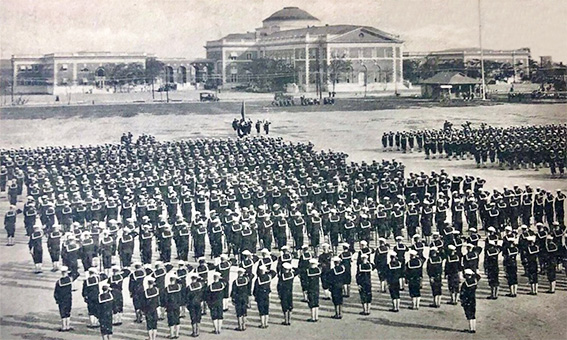
U.S. Naval Training Station, Hampton Roads, Virginia
Because the virulent flu strain (H1N1) peaked initially among naval personnel on shore duty in the last weeks of 1918, one scholar called this "largely a naval affair". Throughout the pandemic, in accordance with with wartime security, the Department of the Navy was reluctant to reveal the extent of the influenza outbreak. - [Naval History and Heritage Command]
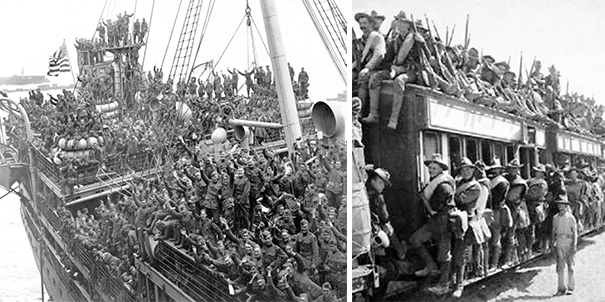 Overcrowded ships and trains were used to transport troops to the Western Front in WW1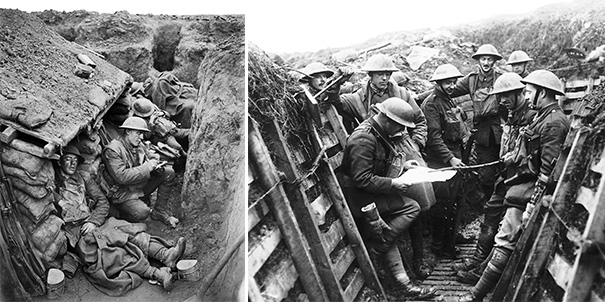
WW1 trench warfare Kings Liverpool Regiment in Flanders
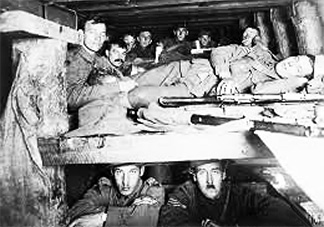
The congested interior of a dugout 15 feet below ground. Men were crowded in two layers
Dugouts were used extensively as protection from shelling on the Western Front. They were used as an area to rest, and carry out other activities sometimes, such as eating.
1918 Time Line in the USA
March : First reported case at Camp Funston, Kansas. News of the war dominates headlines, and after a few weeks, the flu epidemic abates and most Americans believe the worst is over.April to June : Thousands of infected American troops pass through the east coast exit ports, and sail to the fighting in Europe. When they land in France, the virus spreads across the continent, infecting hundreds of thousands of civilians, and combatants alike.
July : Public Health Officials issue a bulletin about the so-called Spanish Influenza.
August : The second wave of the virus mutates, and hits Europe hard. Troop and supply ships spread the disease. Sailors stationed on board the Receiving Ship in Boston Harbour begin reporting sick with flu-like symptoms on the 27th. By August 30th over 60 sailors were sick. Flu sufferers commonly described feeling as if they "had been beaten all over with a club." Within 2 weeks over 2,000 officers and men of the First Naval District had contracted influenza.
In the latter part of August 1918, somewhere in western France, the virus mutates and becomes highly toxic.
September : Dr Victor Vaughn acting Surgeon General of the Army, proceeds to Camp Devens near Boston. What Vaughn sees changes his life forever:"I saw hundreds of young stalwart men in uniform coming into the wards of the hospital. Every bed was full, yet others crowded in. The faces wore a bluish cast; a cough brought up blood stained sputum. In the morning the dead bodies are stacked outside like cordwood." On the day, Vaughn arrived at Camp Devens, 63 men died from influenza.
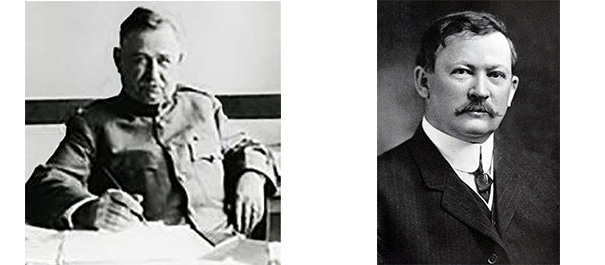
Dr Victor Vaughn, Surgeon General of the Army Dr Rupert Blue, United States Surgeon General
Vaughn, a former president of the American Medical Association, stated: "This infection, like war, kills the young, vigorous, robust adults. The husky male either made a speedy and rather abrupt recovery, or was likely to die." He stated that the world was lucky the 'Spanish Lady' hadn't claimed even more victims. He pointed out that doctors of the day; "knew no more about flu than the 14th century Florentines had known about the Black Death".
US Surgeon General Rupert Blue dispatches advice to the press on how to recognise the influenza symptoms. Blue prescribed; bed rest, good food, salts of quinine and aspirin for the sick.
Bayer Aspirin was just introduced to the US market at the time of the Spanish flu. But because Bayer was a German company, many Americans distrusted it, and thought it was a form of germ warfare. Ironically, one of the fatal flu victims was Anton Dilger, in charge of German biological warfare in WW 1

October : Boston registers 202 deaths from Spanish flu on 2nd October. The city cancels its Liberty Bond parades and sporting events. Churches were closed and the stock market was put on half-days.
On October 6th, Philadelphia posts the first of several gruesome records for the month: 289 influenza related deaths in a single day.
Congress approves a special US$1 million fund to enable the US Public Health Service to recruit physicians and nurses to deal with the growing epidemic. US Surgeon General Rupert Blue sets out to hire over 1,000 doctors and 700 nurses. Many medical professionals are already engaged in providing care to fighting soldiers. Blue was forced to look for recruits in old-age homes and rehabilitation centres.
851 New Yorkers die from Spanish flu in a single day. In Philadelphia, the city's death rate for one single week is 700 times higher than normal.
The crime rate in Chicago drops by 43%. Authorities attribute the drop to the toll that influenza was taking on the city's potential lawbreakers.
October 1918 turns out to be the deadliest month in the nation's history as 195,000 Americans fall victim to influenza. The total of Americans killed in its 25-week rampage would be 675,000
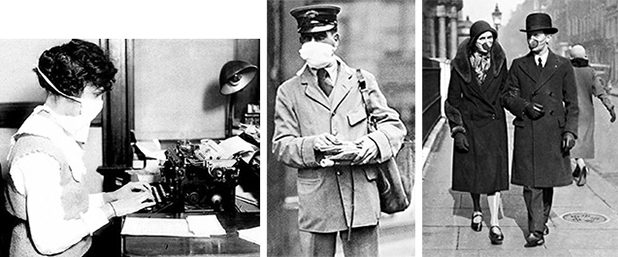
New York typist with mask 1918 New York Postman 1918 London couple with masks 1919
November : To mark the end of World War 1, 30,000 San Franciscans took to the streets to celebrate. There was much dancing and singing. Everyone wore a face mask.
Sirens wail on November 21, signalling to San Franciscans that it is safe - and legal - to remove their protective face masks. At that point 2,122 were dead from influenza.
December : 5,000 new cases of influenza were reported in San Francisco.
[PBS online - The American Experience]
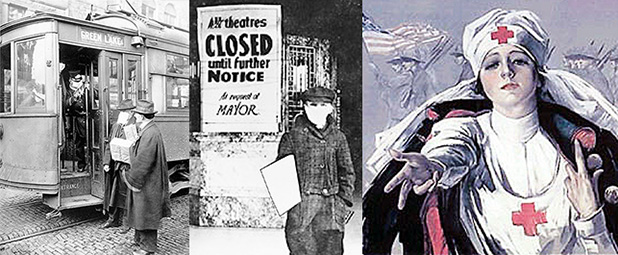
Seatle tram conductor refusing entry without mask - Theaters closed - Nurses, front-line care
Case Studies
Brevig Mission, Alaska had a population of 84 in 1918. In November 1918, it lost 85% of its population to Spanish flu leaving only 13 children and teenagers.
In February 1998, The Molecular Pathology Division of the US Armed Forces Institute of Pathology recovered samples of the 1918 influenza from a frozen corpse of an Inuit woman buried almost eight decades in the permafrost at Brevig. This was one of four recovered samples containing viable genetic material of the 1918 virus. This sample provided scientists a unique opportunity to study the virus and determine it was avian flu H1N1.
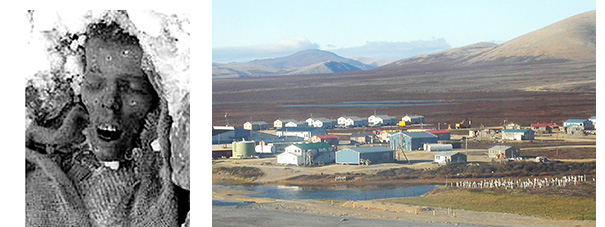
1918 Flu victim recovered from Brevig permafrost Brevig Mission Alaska. Mass graves in foreground
Only 384 people currently live in Brevig Mission [2019 census]. How the 1918 virus reached this small village is unknown. Perhaps by a mail delivery person, or traders from a nearby city who travelled on dog-sleds.
Later, the local government ordered a mass grave site, marked only by small white crosses, be created on a hill beside the village. The gravesite was frozen in permafrost.
Samoan Islands in the Pacific Ocean were split between the United States, which controlled the eastern islands, and New Zealand, which had seized the western islands from Germany at the start of the World War. On 17th November 1918, the steamship Talune, from New Zealand, anchored at Apia, the capital of Western Samoa. It carried people ill with the flu. Before the end of that year, a matter of less than two months, 7,542 died of influenza, and its complications in Western Samoa - approximately 20% of the total population.
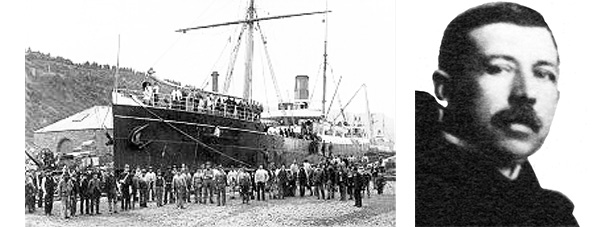
S.S. Talune Commander John M. Poyer
Without orders from the government but based on what he learned from a radio news service, the Governor of American Samoa, Navy Commander John M Poyer, instituted a quarantine policy. When he heard of the outbreak on Western Samoa, he banned travel to or from the neighbouring islands,which were about 60 kilometres (37 miles) apart.
When the Governor of Western Samoa, Lt Col. Robert Logan, sent a boat with mail to American Samoa to be put on the itinerant mail boat docked there, Poyer refused to even allow the mail bags to be transferred. Enraged, Logan temporarily stopped all radio communication with the American islands.
Poyer persuaded the island's natives to mount a shore patrol to prevent illegal landings. People who disembarked from ships sailing from the American mainland were kept under house arrest for a specified period, or examined daily.
Aspects of the quarantine continued into 1920, a year after Poyer departed to the sound of a 17-gun salute.
There were no influenza deaths in American Samoa
Social Facts
Many cities states and countries enforced restrictions on public gatherings and travel to try to minimise the epidemic.Quarantines were enforced with little success (except for American Samoa - see above, and Iceland).
One U.S. town even outlawed shaking hands (in hindsight a wise move).
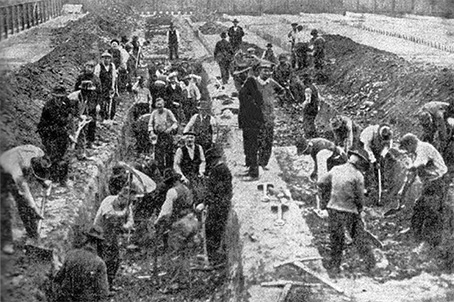
Men digging mass graves - Philadelphia
There were many reports of places with no health care workers to tend the sick because of their own ill health and no able-bodied morticians or gravediggers. Mass graves were dug by steam shovel, and bodies buried without coffins in many places.
World War I
On 28 July 1914 the First Wold War was declared, resulting in the Central Powers, led by Germany, and assisted by Austria-Hungary, and the Otterman Empire, battling against the Allied Powers - Britain, and the British Empire, France, the Russian Empire, Japan, and several other countries.The war fell into a stalemate with very high casualties on the Western Front in France. From 1914 until early 1917, U.S. President Woodrow Wilson's foreign policy was to keep the United States out of the war in Europe, and to broker a peace agreement.
Wilson was re-elected as President of the United States in 1916. This made him the first Democrat since Andrew Jackson (in 1832) to win two consecutive terms. The Democrats also kept control of Congress.
In January 1917, the Germans instigated a new policy of unrestricted submarine warfare against ships. After a series of attacks on American ships, Wilson held a cabinet meeting on 20 March. It was agreed that the time had come for the United States to enter the war. The United States declared war against Germany on 6 April 1917.
Under the command of General Pershing, the American Expeditionary Forces arrived in France in mid-1917.
Russia exited the war, after signing a treaty in March 1918. This allowed the Germans to relocate soldiers from the Eastern front of the war, and launch the Spring Offensive on the Western Front.
Both sides suffered hundreds of thousands of casualties as the Germans forced back the British and French. But Germany was unable to capture the French capital, Paris.
There were only 117,000 American soldiers in Europe at the end of 1917, but by mid-1918 10,000 Americans were arriving in Europe every day. With the U.S. forces having joined the fray, the Allies defeated the Germans in two major battles - Belleau Wood, and Chateau-Thierry.
Beginning in August, the Allies launched the Hundred Days Offensive, pushing back the exhausted German army.
By the end of September 1918, the German leadership no longer believed it could win the war. Kaiser Wilhelm II apointed a new government, which immediately sought an armistice with Wilson.
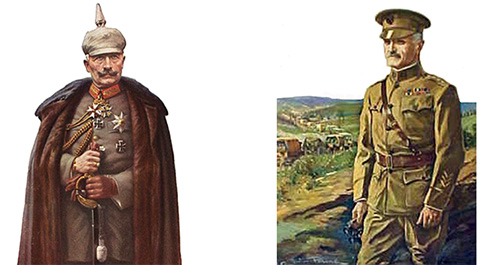
Kaiser Wilhelm II General John J. Pershing
Wilson then travelled to Europe to lead the American delegation at the Paris Peace Conference, thereby becomming the first U.S. President to travel to Europe while in office.
Wilson remained in Europe for six months, where he focused on reaching a peace treaty to formally end the war. However, Wilson developed an illness (Influenza) during the conference, which greatly hampered his attendance.
The conference ended in May 1919. Wilson was unable to convince the other Allied powers, France in particular, to temper the harshness of the settlement being levelled at the defeated Central Powers, especially Germany.
For his efforts in creating a lasting world peace, Woodrow Wilson was awarded the
1919 Nobel Peace Prize.
Treaty of Versailles
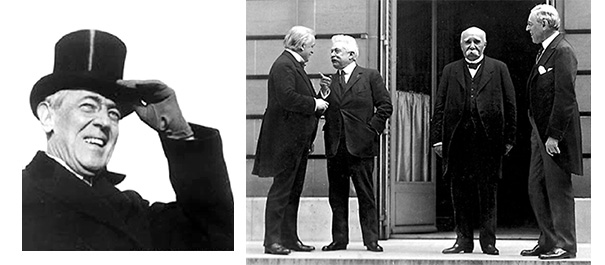
President Woodrow Wilson 1919 The Big Four, Paris 1919 - Woodrow Wilson (right)
Prime Ministers L-R: David Lloyd George (Britain), Vittorio Orlando (Italy), Georges Clemenceau (France)
Wilson’s staff downplayed the President’s illness, telling reporters that “overwork, and Paris’ chilly and rainy weather had sparked a cold and fever”. On April 5, the Associated Press falsely reported that Wilson was ‘not stricken with influenza.’ In private, the President acknowledged the threat posed by the virus, which struck a number of people in his inner circle, including; his personal secretary, his eldest daughter, and multiple Secret Service members.
Wilson's illness made it impossible for him to participate in key negotiations during the conference. This resulted in a significantly different outcome to the peace conference than Wilson had wanted. The President had originally argued that the Allies “should go easy” on Germany to facilitate the success of his pet project, the League of Nations. The formation of the League of Nations was incorporated into the conference’s Treaty of Versailles, which officially ended the war with Germany.
However, French Prime Minister Georges Clemenceau, whose country had endured much devastation during the four year conflict, wanted to take a much tougher stance.
Days after coming down with the flu, an exhausted Wilson conceded to the other world leaders’ demands.
Six months after he came down with the flu, on 2 October 1919, Wilson suffered a debilitating stroke that left him paralysed on his left side, and partially blind. He was confined to bed for weeks and seen only by his wife and physician. His condition improved marginally in the final years of his presidency, until he left office in March 1921.
The weakened Woodrow Wilson died three years later, on February 3, 1924, at the age of 67.
Notable Victims
The following people died in the epidemic:• Guillaume Apollinaire, French surrealist poet .
• Felix Arndt, American composer
• Randolph Bourne, American political thinker
• Anton Dilger, in charge of German biological warfare in WWI
• Henry G Ginaca, American inventor
• Myrtle Gonzalez, American actress
• Joe Hall, Canadian ice hocky player
• Phoebe Hurst, American educator
• Hans E Lau, Danish astronomer
• Harold Lockwood, American actor
• Jacinda and Francisco Marto , 2 of the 3 visionaries at Fatima, Portugal 1917
• Reggie Schwarz, South African cricketer
• Yakov Sverdlov, Russian revolutionary
• William Walker, British diver
• King Watzke, New Orleans bandleader
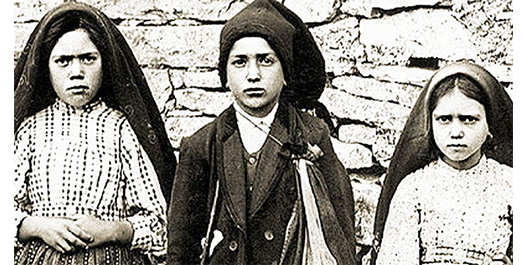
Lucia dos Santos (left), Francisco and Jacinda Marto
The three Visionaries of Fatima, Portugal 1917
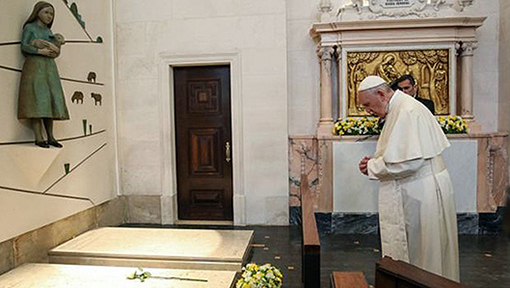
Pope Francis proclaimed Fatima visionaries, Jacinda and Francisco Marto, who claim they saw visions of the Virgin Mary in 1917 and they were made saints on 13-May-2017 ~ 100 years after their 1st vision.
The Marto children died from the Spanish Flu; Francisco in Apl-1919, aged 10; while Jacinda succumbed in Feb-1920, aged 9. Their cousin Lucia dos Santos, who also saw the apparitions, was not included in the proclaimation. Lucia moved to Porto in 1921, and was admitted as a boarder in the school of the Sisters of St. Dorothy aged 14. In 1946 Lucia entered the Carmelite convent of St. Teresa in Coimbra Portugal, where she resided until her death in 2005, aged 97. (Vatican City 20/4/2017)
People without symptoms could be struck suddenly and rendered too feeble to walk within hours. Many would die the next day.
Global mortality rate from the influenza was estimated at 2.5% to 5%. The disease spread across the world killing up to 50 million people in 25 weeks. Some estimates put the total killed at over twice that number, possibly as high as 100 million. An estimated 17 million died in India alone, with a mortality rate of 5% of the population. In the Indian Army almost 22% of troops who caught it died
Some 200,000 were killed in Britain and more than 400,000 in France.
The death rate was especially high in indigenous people, where some entire villages in Alaska and southern Africa perished.
Fourteen percent of the population of the Fiji Islands died in a period of only 2 weeks. By July 1919 257,363 deaths in Japan were attributed to influenza, giving a mortality rate of only 0.425%, much lower than all other Asian countries for which data is available.
Australia nearly 12,000 perished from a population of 2,752,000 (0.43%).
New Zealand lost 8,573 (population 1,164,000 - 0.7%) with Maori deaths 7 times higher than NZ Europeans' per head of population.
Indonesia (then the Dutch East Indies) assumed 1.5 million to have died (population 30 million - 5.0%)
South Africa where the flu made its first appearance in September 1918. By the end of 1918, more than 127,000 African and 11,000 Europeans had succumed to the pandemic. However, eventually about 500,000 people died from the flu, the fifth hardest hit by the pandemic worldwide.
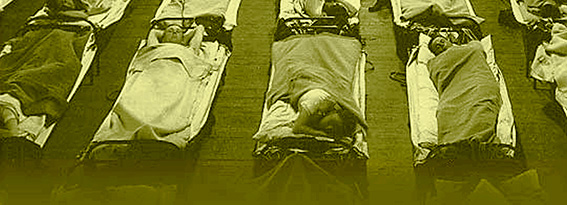
1918 Spanish Flu victims in South Africa
At some point in late 1919, on a day as lost to history as the one of its emergence, Spanish flu made a final human being ill - then mutated again and disappeared
Cases of Covid-19 continue to grow. Total confirmed world-wide cases = 343 miilion. Total deaths = 5.57 million, as at 21 January 2022.
Dengue Fever
 Covid-19